
The content in this article should not be taken as medical advice. Please consult with your healthcare provider regarding your individual health needs.
Your thyroid is a small, butterfly-shaped gland that has a big job to do. It helps run your metabolism to turn food into energy and keep your body’s engine going. It also helps your body regulate blood sugar (glucose). That’s one reason thyroid issues are especially important to watch for if you have diabetes, since changes in thyroid function can affect how your body manages glucose.
When your thyroid isn’t working as it should, managing glucose can feel harder than it needs to be. And in some cases, this can even increase the risk of developing diabetes over time.
Your thyroid at work
The thyroid is part of your endocrine system, which is essentially your body’s hormone communication network. It sits at the front of your neck, just below your voice box, wrapped gently around your windpipe.
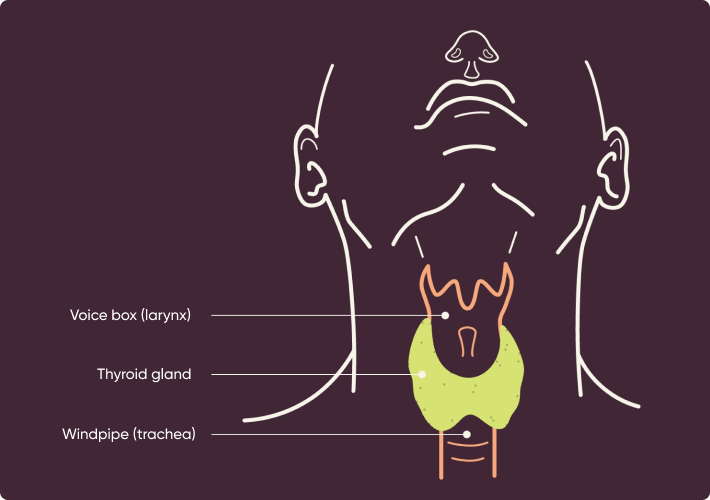
Your thyroid produces thyroid hormones (primarily T3 and T4). Hormones are chemical messengers, and these two influence how fast or slow many of your systems run.
The thyroid-glucose connection
When thyroid hormones are in balance, they help your body convert food into usable energy at a steady, appropriate rate. When they’re not, things can speed up or slow down in ways that ripple through the rest of your metabolism, including glucose regulation.
Thyroid hormones touch several key players when it comes to glucose levels:
- They influence how your liver makes and releases glucose into the bloodstream
- They affect how your muscles take up and use glucose for energy
- And they even play a role in how your pancreas produces insulin, the hormone responsible for lowering glucose levels
The bottom line? Your thyroid shapes how glucose moves, gets stored, and gets used throughout your body.
How your body keeps thyroid hormones in balance
Your thyroid doesn’t work alone. It takes direction from the pituitary gland, a small but powerful gland in your brain.
The pituitary gland releases thyroid-stimulating hormone (TSH), which tells your thyroid how much hormone to produce. If thyroid hormone levels are low, TSH goes up. If levels are high, TSH drops back down.
It works a lot like a thermostat, constantly adjusting to keep things steady. Problems arise when this feedback loop gets disrupted and hormone levels drift too high or too low.

Hyperthyroidism and glucose
When your body produces too much thyroid hormone, it’s called hyperthyroidism. This causes your metabolism to accelerate, and systems run faster than usual.
For glucose, this can mean the liver releases more sugar into the bloodstream. At the same time, insulin breaks down more quickly, so it doesn’t get the chance to do its job effectively. The result is that glucose may run higher than expected.
Hyperthyroidism can send mixed signals. Symptoms like shakiness, hunger, or anxiety can overlap with how low glucose sometimes feels. That overlap can make it tempting to eat “just in case,” even when glucose isn’t actually the driver. Having 24/7 insight from a glucose biosensor like Stelo can help separate what your body is feeling from what your glucose is doing. That way, responses feel more informed than reactive.
Hypothyroidism and glucose
Hypothyroidism is the opposite problem: too little thyroid hormone. Your metabolism slows, sometimes quietly, sometimes dramatically.
When this happens, muscles don’t use glucose as efficiently, and insulin tends to hang around in the body longer. That combination can increase the risk of glucose dipping lower, especially for people using insulin or certain diabetes medications.
People with hypothyroidism often notice fatigue, weight gain, and glucose levels that feel harder to explain. Glucose may dip more than expected, even without major changes in food or activity.
If diabetes is part of the picture, you’ll want to work with your healthcare team as medication doses sometimes need adjustment until thyroid levels are treated and stabilized. Again, this isn’t about willpower or “doing something wrong.” It’s just simple physiology.
Why this relationship matters for glucose management
Both hyperthyroidism and hypothyroidism can make glucose harder to manage. And the overlap between thyroid disorders and diabetes goes both ways: each condition increases the likelihood of the other.
That’s why it’s worth paying attention if you notice changes like a racing or unusually slow heart rate, unexplained weight loss or gain, trouble tolerating heat or cold, mood changes like anxiety or depression, or shifts in menstrual cycles.
Women (including those without diabetes) are five to eight times more likely to be diagnosed with a thyroid condition. If you notice unexplained shifts in glucose, this could be an early sign of a thyroid issue.
What you can do next
Thyroid testing is simple. It’s done with blood work, and it can offer valuable context if your glucose patterns suddenly feel off.
If you notice unexplained changes in energy, weight, or glucose, it’s reasonable to ask your healthcare provider whether thyroid testing makes sense.
And if you’re already noticing patterns, Stelo can help those patterns surface sooner. Seeing how glucose responds across days and weeks can provide the context that makes conversations with your care team more productive, often before symptoms feel overwhelming.

The bigger picture
A healthy thyroid helps support balanced glucose. When thyroid hormones are out of range, glucose regulation often feels more complicated. This isn’t because you’re doing anything wrong, but because your metabolism is receiving conflicting instructions.
Understanding that connection gives you leverage. With the right testing, treatment, and tools that help you notice trends over time, both systems can work better together. And when they do, managing your energy, your glucose, and your overall health tends to feel a lot more empowering.

Curated & Reviewed by: Sarah O’Hara
RD, LDN, CDCES
RD, LDN, CDCES
Sarah is a registered dietitian and certified diabetes care and education specialist. Previously, she worked with children diagnosed with diabetes and their families, delivering personalized education and support.
