Nutrition
Healthy low-glycemic index snacks for late night cravings
Published: Apr. 14, 2026
3 min read
The content in this article should not be taken as medical advice. Please consult with your healthcare provider regarding your individual health needs.
Late-night snacking doesn’t usually come from a lack of discipline. It comes from long days, late dinners, shifting schedules, or the simple need for comfort and closure before bedtime.
The truth is that some snacks help you feel calm and steady, while others can bother you during the night, showing up as restless sleep, early-morning hunger, or feeling tired and fuzzy the next day. Often, the difference is simple: how a snack affects your blood sugar, also called glucose. Snacks that release glucose slowly and steadily tend to support more stable energy, while those that increase glucose quickly can set off a rise-and-fall cycle that your body feels long after you’ve gone to bed.
Where “low-glycemic” comes in
Instead of thinking about food as rules or restrictions, it can help to think about speed. Some foods move through the body fast and release glucose all at once. Others break down more slowly, giving the body a steady flow of energy.
Low-glycemic index (GI) foods usually work in a slower way. They often include protein, fiber, healthy fats, or whole foods, which help slow digestion and keep glucose from rising too quickly. At night, when your body is getting ready to rest and repair, that slower, steadier glucose can help you feel more balanced and comfortable.

Why nighttime choices can echo into the morning
After dark, your metabolism doesn’t shut off, but it does change. Glucose handling, insulin sensitivity, and digestion all follow circadian rhythms. Snacks that digest very quickly can create sharper glucose rises, followed by dips later in the night. For some people, that pattern shows up as disrupted sleep or low energy the next morning.
Snacks that release energy more slowly tend to blend into the night more quietly. They’re less likely to demand attention from your system while you’re sleeping, and more likely to leave you feeling steadier when you wake up.
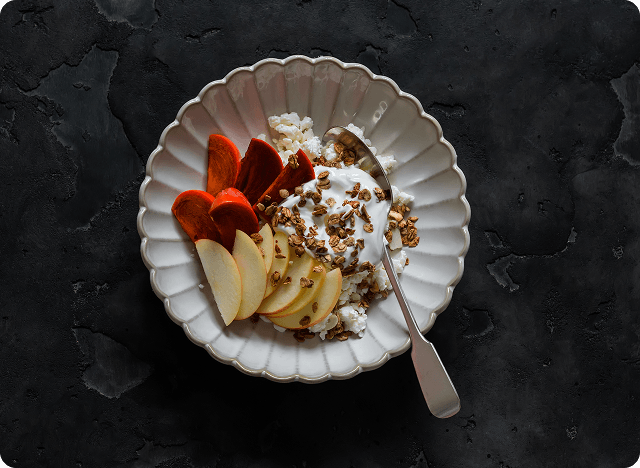
Picking healthy late-night snacks with low-glycemic index
There’s no single “right” late-night snack, but many options that feel supportive have something in common: they digest gradually and offer steady fuel instead of a quick surge. Here are five examples of healthy low GI snacks that tend to fit that pattern.
1. Greek yogurt with berries
The protein in Greek yogurt slows digestion, while the fiber in berries softens the glucose response. Together, they create a snack that feels satisfying without heaviness.
2. A small handful of nuts or a spoonful of nut butter
Nuts are rich in healthy fats and fiber, which tend to linger in the digestive system. That slower pace can help hunger settle rather than rebound, especially on nights when you’re craving something simple and comforting.
3. Vegetables with hummus
Crunchy vegetables paired with hummus offer fiber and fat in an easy, familiar combination. Fiber acts like a natural speed bump for digestion, helping energy release feel smoother through the night.
4. Cottage cheese with fruit
Cottage cheese contains casein, a protein that digests slowly and continues releasing energy over several hours. Adding fruit brings a touch of sweetness without the fast rise you might get from refined carbohydrates alone.
5. Air-popped popcorn
As a whole grain, popcorn contains fiber that helps slow digestion. For some people, it satisfies the desire for something crunchy while staying relatively gentle on overnight glucose patterns.

Learning from patterns, not rules
Everyone’s body responds differently to food, even snacks that look the same on paper. A glucose biosensor like Stelo can offer a window into your glucose patterns by showing gentle rises and falls throughout the night.
And seeing overnight glucose patterns can help connect subtle dots: which snacks lead to steadier nights, which ones precede restless sleep, and which choices support easier mornings. Over time, those patterns can guide decisions gently, without turning food into a test or moral judgment.
A steadier way forward
Late-night snacking doesn’t need to be something you “fix.” It’s simply another moment where your body offers feedback. Choosing snacks that release energy slowly can support calmer nights and more predictable mornings. But the most useful insight comes from noticing how you feel.
When you approach nighttime eating with curiosity instead of rules, it becomes less about doing it “right” and more about learning your own rhythms. And that kind of understanding tends to carry forward quietly, steadily, and with a lot less friction.

Curated & Reviewed by: LaDonna Oelschlaeger
PharmD, BC-ADM, APh
PharmD, BC-ADM, APh
LaDonna Oelschlaeger is a clinical pharmacist with a Doctor of Pharmacy degree and board certification in diabetes management.
