Glucose basics
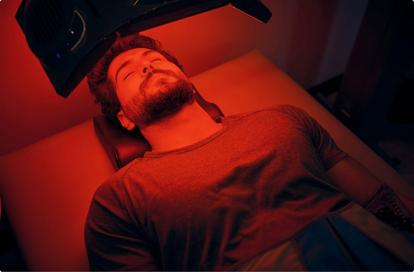
Does red light therapy lower blood sugar?
Written by Kate Daugherty, MS, CNS
Published: Feb. 10, 2026
4 min read
The content in this article should not be taken as medical advice. Please consult with your healthcare provider regarding your individual health needs.
Red light therapy has officially entered the “maybe this can fix everything” era. Claims range from smoother skin to faster recovery to instant fat-burning. It all sounds exciting, but excitement isn’t evidence. The real question is simple: can shining light on your body actually change glucose levels?
Let’s walk through what red light therapy does, how it impacts blood sugar, and how it fits alongside other tools like sauna or cold exposure for metabolic health.

What exactly is red light therapy?
Red light therapy (also called photobiomodulation) uses low-level wavelengths of red and near-infrared light. These wavelengths, typically in the range of 620–1440 nanometers, interact with mitochondria—the tiny “powerhouses of the cell” that turn oxygen and nutrients into usable energy (ATP).
A few things happen during that interaction:
- Light displaces nitric oxide from mitochondria, freeing up the cell to make more energy
- Improved circulation
- Reduced inflammation
- More efficient cellular communication and repair
This is why the therapy shows up across so many use cases. From athletic recovery and skin healing to joint pain and cognitive support, photobiomodulation isn’t targeting one system—it’s improving the machinery that powers all systems.
So, does red light therapy actually lower blood sugar?
Here’s the short answer: not directly, not immediately, and not in the dramatic way some online claims suggest. But the longer answer is more interesting.
Small studies on red light therapy show early (but limited) metabolic effects. A handful of human and animal trials demonstrate:
- Slight improvements in insulin sensitivity
- Reduced inflammation markers
- Improvements in glucose tolerance in certain populations
- Better glucose uptake in muscle tissue under experimental conditions
These aren’t large, definitive studies. They suggest that red light may support the systems that regulate glucose, rather than functioning like a glucose-lowering therapy itself.
Improvements in mitochondrial function and reductions in inflammation are perhaps the two most important pathways for ultimately influencing blood sugar.

Muscle, mitochondria, and glucose uptake
Red light therapy has been shown to improve mitochondrial function in muscle cells. When mitochondria work well, glucose is cleared from the bloodstream more efficiently (especially when paired with movement).
It’s not enough to replace regular exercise, adequate protein intake, or quality sleep, but it can help cells produce energy with less strain.
Ultimately, better recovery means better consistency. Better consistency means better glucose patterns. This is an indirect benefit, but an important one.
Inflammation and insulin signaling
Chronic inflammation blunts insulin signaling. Red light therapy consistently reduces inflammatory markers, which may (indirectly) improve how cells respond to insulin.
This is not a cure or even a standalone treatment. But it reinforces red light as a supportive therapy that helps the fundamentals work better.
Will red light make your glucose drop in real time?
There is currently not enough human evidence to support this claim.
If you’re using a glucose biosensor like Stelo, you likely won’t see a dip in your glucose levels after one 10-minute red light therapy session. Red light therapy doesn’t seem to operate on that timeline.
The benefits, where they exist, come from cumulative use that improves cellular efficiency over weeks or months. It can complement the foundations of metabolic health, but it doesn’t replace them.

Sauna, cold, and red light compared
Red light therapy isn’t the only “recovery‑adjacent” tool people use for metabolic health. Sauna and cold exposure are often mentioned in the same breath, but they work very differently. Framing them alongside red light helps show how each fits into the bigger picture.
Sauna: Stress that spikes glucose
Sauna is a direct metabolic stressor. Many people see a temporary glucose spike during use — a normal response as stress hormones signal the liver to release glucose.
Despite the short-term rise, regular sauna use is linked to:
- Better insulin sensitivity
- Lower inflammation
- Improved endothelial function
- Stronger cardiovascular health
- Activation of heat shock proteins that boost cellular resilience
Short-term stress, long-term benefit. The temporary rise in glucose is part of the adaptation.
Cold exposure: Activating brown fat
Cold works on the opposite end of the spectrum. It increases norepinephrine and activates brown fat, improving metabolic flexibility.
Responses vary widely depending on temperature, duration, and individual biology. For many, cold acts as a positive stressor—though it can tip into negative stress if conditions aren’t right.
Red light: Gentle cellular support
Unlike sauna or cold, red light therapy isn’t about stress conditioning. It’s gentler, focused on supporting mitochondria and reducing inflammation.
Together, sauna, cold, and red light act as different “inputs” into the same metabolic system—stressors that build resilience, and support that helps the system run smoothly.
Light without the hype
Red light therapy doesn’t directly lower blood glucose. But it can support the biological environment where better metabolic control happens. This means stronger mitochondria, healthier inflammation pathways, improved muscle recovery, and ultimately more consistent habits.
For people looking for a shortcut, it won’t be enough. But for people already investing in balanced nutrition, regular exercise, quality sleep, and stress regulation, it may be a helpful add-on that helps the system work well so the real glucose-lowering interventions can work even better.
The production of this article was sponsored by Stelo by Dexcom.
References:
Author profile
KD
Kate Daugherty, MS, CNS
Kate Daugherty, MS, CNS, is a Certified Nutrition Specialist and functional medicine nutritionist with a Master’s in Human Nutrition and Functional Medicine.