Glucose basics

How to improve mitochondrial health and regulate glucose
Written by Kate Daugherty, MS, CNS
Published: Feb. 19, 2026
Updated: Aug. 7, 2026
3 min read
The content in this article should not be taken as medical advice. Please consult with your healthcare provider regarding your individual health needs.
Mitochondria are key players in your body’s energy, metabolism, and glucose regulation. In this article, we’ll break down what mitochondria do, why mitochondrial health matters for steady glucose, and how small changes can support mitochondrial function naturally. Whether you’re curious about how to improve mitochondrial health or want practical tips for balancing glucose, we’ll guide you through the science and share actionable ways to help your cells thrive.
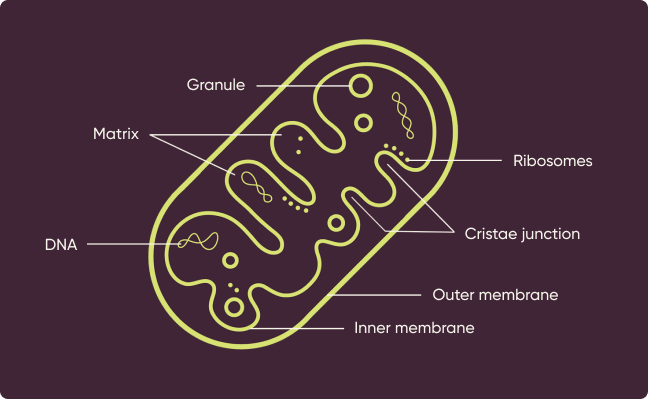
What are mitochondria, really?
Mitochondria are small structures found inside almost every cell that handle much of the work required to keep the system running smoothly. They’re often described as the “powerhouse of the cell” because their main job is simple, but essential. Mitochondria take the most basic building blocks from the foods you eat—like glucose from carbs, fatty acids from fats, and amino acids from proteins—process them through a series of metabolic steps, and transform them into usable energy called adenosine triphosphate (ATP).
Calling mitochondria an energy factory is a major oversimplification. They don’t just make ATP. They sense nutrients, respond to stress signals, and help determine what gets burned versus stored. They’re constantly reading the internal landscape and adjusting their output to match what the body needs. Their efficiency shapes how well cells function overall, which is why healthy mitochondria support steadier energy, clearer thinking, and a more resilient metabolism.
How the mitochondria use glucose
Glucose is one of the primary fuels that mitochondria can use. Let’s break down the science:
- When you eat carbohydrates, glucose absorbs into your bloodstream, enters your cells, and is converted into pyruvate (a key molecule in cell metabolism).
- Pyruvate gets shuttled into the mitochondria, where it helps power the process that creates ATP. This process is called oxidative phosphorylation, but all it really means is “oxygen-dependent energy production.”
When mitochondria are healthy, they process glucose efficiently and help keep energy stable. But problems tend to arise when glucose is consistently high or swings sharply. That pattern increases metabolic workload, pushes oxidative stress higher, and makes it harder for mitochondria to keep everything running smoothly.

What stresses mitochondria?
When your glucose levels fluctuate consistently, it puts extra pressure on your mitochondria to keep up. Chronic inflammation, low nutrient availability, disrupted sleep, and long-term stress also add pressure. Mitochondria respond to all of these inputs. They’re built for heavy metabolic “work,” but they’re also highly responsive to signals that something in the system is off.
When mitochondria are overwhelmed, they produce more reactive oxygen species, or ROS. These molecules are a normal part of metabolism, but excess ROS can interfere with cellular structures and signaling. Over time, that strain reduces how efficiently mitochondria generate energy and how well cells respond to insulin.
Why mitochondria matter for glucose balance
When mitochondria struggle to make enough ATP, cells become less responsive to insulin. That means glucose doesn’t move into the cell as easily, so it stays in the bloodstream longer. It’s a reinforcing loop. Higher glucose stresses mitochondria and stressed mitochondria make glucose harder to regulate.

Metabolic flexibility
One sign of healthy mitochondria is the ability to switch between burning carbohydrates and burning fats for fuel. This shifting is called metabolic flexibility. People with flexible metabolism handle glucose swings better, recover faster, and feel more stable throughout the day.
People who are metabolically inflexible often feel the opposite: hunger shows up quickly, fatigue after meals, glucose changes are harder to predict. It isn’t about willpower. Metabolic inflexibility is a key signal that the system needs support at the cellular level.

How to support mitochondrial health (and glucose regulation)
The good news? The mitochondria respond quickly to consistent habits. A few fundamentals go a long way.
Move your body regularly
Resistance training is especially important because it increases mitochondrial density and efficiency.
Get morning sunlight
Light cues help regulate circadian rhythms, which in turn support mitochondrial function and glucose regulation.
Eat balanced, predictable meals
A combination of protein, healthy fats, and fiber help keep glucose levels stable and reduce metabolic strain.
Prioritize sleep
When you get quality sleep, mitochondria repair oxidative damage and reset for the next day.
Use “good stress” wisely
Sauna and cold exposure are beneficial stressors that can help mitochondria adapt and become more resilient.
Aim for steady glucose
Fewer dramatic highs and lows create a better environment for mitochondria to do their job well. A glucose biosensor like Stelo can help you see those patterns 24/7, so you’re not guessing how daily habits are shaping your metabolic load.
Bringing it all together
Mitochondria and glucose aren’t separate topics. They’re part of the same metabolic conversation. Healthy mitochondria make glucose easier to manage, and steadier glucose helps mitochondria do their job well. Support one and you naturally reinforce the other, which is the whole point of looking at metabolism as an integrated system.
The production of this article was sponsored by Stelo by Dexcom.
Author profile
KC
Kate Daugherty, MS, CNS
Kate Daugherty, MS, CNS, is a Certified Nutrition Specialist and functional medicine nutritionist with a Master’s in Human Nutrition and Functional Medicine.