What a marathon runner learned from using Stelo: Jackson’s story
Published: Jul. 30, 2026
3 min read

The content in this article should not be taken as medical advice. Please consult with your healthcare provider regarding your individual health needs.
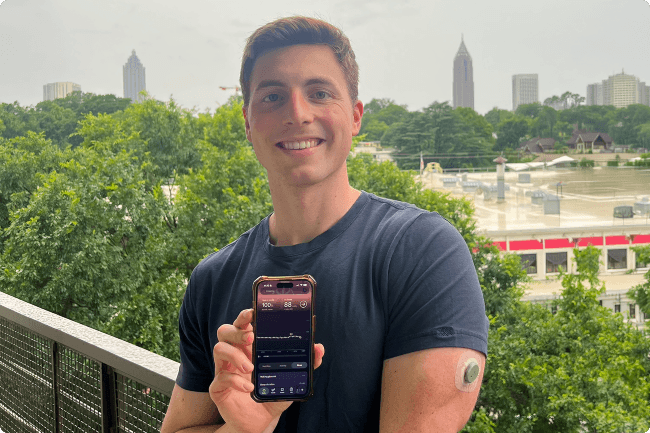
We love getting to know people in the Stelo community, like Jackson, a personal trainer, marathon runner, and soon-to-be Doctor of Physical Therapy (DPT), who uses the Stelo Glucose Biosensor to gain deeper insights into his glucose and build better habits over time.
Let’s take a closer look at Jackson’s journey and what he’s learned along the way.
From injury to purpose
For Jackson, movement has always been part of his everyday rhythm—something that keeps him feeling steady, energized, and in tune with his body. Growing up, Jackson was always active, spending much of his childhood playing sports. However, that all changed after a serious knee injury pulled him out of competition and regular exercise altogether. The sudden loss of physical activity took a toll, not just physically but mentally.
“It made me realize how important being mobile and active is to everyday life,” Jackson says. That experience sparked a passion for rehabilitation, fitness, and understanding the deep connection between physical and mental health.
Jackson went on to study kinesiology with a focus on clinical exercise physiology, became a certified personal trainer, and added a psychology minor to better understand the mental side of wellness. Today, as he wraps up the final months of physical therapy school, his mission is clear: help people move better so they can live happier, healthier lives.
When insights bring new perspectives
During routine bloodwork, Jackson was surprised to learn he had a slightly elevated A1C near the prediabetes range—even though he sticks to healthy habits like staying active, eating nutritious meals, and dedicating his career to fitness.
His mother and grandmother had received similar results in the past, which raised new questions for Jackson.
“I remember thinking, ‘How is this possible? I’m healthy and active.'” he says. While his healthcare providers weren’t overly concerned, Jackson’s curiosity kicked in. A self-described health and data nerd, he wanted to better understand what was happening inside his body. That piqued his interest in tools like glucose biosensors.
Using Stelo as a learning tool for personal growth
Jackson views Stelo as an educational tool—one that brings more awareness to how daily choices impact his body. “Seeing the data has helped me be more mindful,” he explains. “Not just with food, but with different types of exercise, sleep, and recovery.”
One of his biggest takeaways is how differently his body responds depending on the type of workout. He noticed that doing high intensity cardio in the morning has helped keep his glucose steadier throughout the day—even after meals with more carbohydrates. Meanwhile, long marathon training runs have sometimes led to slightly elevated glucose the following day, prompting him to experiment with fueling strategies and recovery nutrition.

“It’s fascinating,” he says. “You start to see patterns you’d never pick up on without the data.”
Small nutrition insights, big awareness
Using Stelo to experiment with food has helped Jackson notice that for him, carbohydrate-heavy snacks caused bigger glucose spikes when they weren’t paired with protein or healthy fats. Even meals he already considered “healthy” sometimes surprised him.
“For example, getting a burrito versus a bowl—just adding the tortilla made a noticeable difference,” he says. “It’s intuitive, but seeing it play out in the data really sticks.”
Rather than making dramatic changes, Jackson has focused on smarter pairings, for instance, adding healthy fats like seeds to yogurt bowls. This helps support steadier glucose responses without giving up foods he enjoys.

Try your own nutrition experiments with Stelo
Explore food tips, smart swaps, and label tricks—using Stelo to see how each tweak impacts your glucose.
Training for a marathon, with Stelo along for the run

As Jackson gears up for his third official marathon, Stelo has become a staple in his daily routine. He’s planning to use Stelo during long training runs and on race day itself, curious to see how his body responds throughout extended endurance efforts.
In past marathons, he experienced unexpected symptoms like facial paleness and full-body flushing—something that wasn’t explained by hydration or electrolyte testing. Now, he wonders whether glucose levels may have played a role.
“I’m really curious to see what the data shows this time around,” he says.
A balanced approach to data
Jackson’s advice for others—especially fitness-focused people curious about tracking glucose—is simple: use the data for learning, not stress.
Everyone is different in terms of how often they like to check in on their glucose—some people like to check in throughout the day to log events like meals and exercise. Others, like Jackson, like to check in after meals or once or twice a day, now that he has gotten more in tune with his own glucose patterns.
“The goal is information, not anxiety,” Jackson says. “It’s about learning more about your body, not judging it.”

Moving forward with Stelo
As Jackson prepares for graduation, marathon day, and his next chapter as a physical therapist, Stelo remains a valuable part of his wellness toolkit. For Jackson, understanding his body is just another way to support what matters most: staying active, staying curious, and helping others do the same.
Ready to try Stelo for yourself?
Jackson is a paid Stelo ambassador.

Reviewed by: Kayce Sol
MA, RN, BSN, CDCES
Kayce Sol is a registered nurse and certified diabetes care and education specialist.
