Nutrition

Does ginger really lower glucose levels?
Written by Kate Daugherty, MS, CNS
Published: May 21, 2026
4 min read
The content in this article should not be taken as medical advice. Please consult with your healthcare provider regarding your individual health needs.
Ginger is both a familiar kitchen ingredient and a surprisingly well-studied medicinal plant. For thousands of years, it’s been used to help with nausea, digestion, and inflammation. It’s grated fresh into stir‑fries and broths across East and Southeast Asia, simmered into warming chai throughout India, steeped into spicy teas in the Caribbean, and folded into cookies, cakes, and tonics across Europe and North America. In Japan it’s pickled and delicate; in West Africa it’s bold and fiery; in traditional Chinese and Ayurvedic practices it’s been used for centuries as a daily staple.
Now, we’re curious: can ginger meaningfully lower glucose levels?
The short answer is that while there’s some evidence ginger can modestly improve glucose regulation, it’s not a major driver of change. The more useful question is how much it truly matters, and when.
How ginger might lower glucose levels
Most plants contain complex chemical compounds that interact with human metabolism. Ginger’s main bioactive compounds are gingerols and shogaols, which appear to influence glucose regulation through several mechanisms.
1. Improved insulin sensitivity
Some studies suggest ginger compounds help muscle cells take up glucose more efficiently. One proposed mechanism is increased activity of GLUT4, a glucose transporter that helps pull sugar out of the bloodstream and into cells.
The simple explanation: when GLUT4 works well, blood glucose after meals tends to rise less dramatically.
2. Slower carbohydrate absorption
Another proposed mechanism of action is that ginger may inhibit certain digestive enzymes that break down carbohydrates.
When carbs are broken down and absorbed at a slower pace, the usual post-meal glucose spikes may not be as sharp or sudden—that’s a win for your metabolism. Over time, these smaller glucose fluctuations can help you keep your glucose goals in check and support your long-term health goals.
3. Anti-inflammatory effects
Chronic low-grade inflammation is strongly linked with insulin resistance. Ginger has well-documented anti-inflammatory effects and may help reduce inflammatory signaling pathways that interfere with insulin function.
Here’s an important caveat: this is not unique to ginger. Many plant compounds (polyphenols, flavonoids, etc.) behave similarly.

What the research shows
Several randomized controlled trials in people living with type 2 diabetes or insulin resistance have looked at ginger supplementation. Most studies use powdered ginger capsules in the range of 1–3 grams per day.
Across these studies, researchers have observed that ginger can provide:
- Lower fasting blood glucose levels
- Improvements in HbA1c
- Improved insulin sensitivity
- Reductions in inflammatory markers
Meta-analyses (studies that pool multiple trials) generally conclude the same thing: ginger appears to have a small but statistically significant effect on glucose management.
Fresh ginger vs. supplements
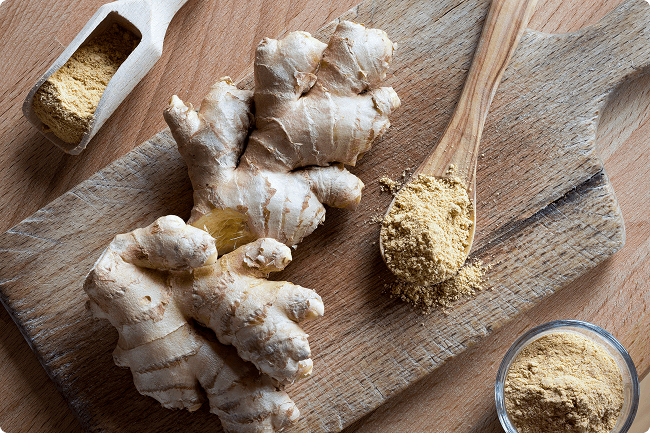
Most clinical trials use standardized ginger powder capsules, not fresh ginger as we would use in the kitchen. That doesn’t mean fresh ginger is ineffective. It simply means the exact dose is harder to quantify. Roughly speaking:
- 1 gram powdered ginger ≈ ½ teaspoon of dried ginger
- Fresh ginger contains more water, so the equivalent is closer to 1 teaspoon freshly grated
Therefore, clinically significant doses are likely around 1-3 teaspoons of freshly grated ginger per day. That’s a lot of spice. Adding ginger to meals is unlikely to dramatically shift blood sugar, but it may contribute to the overall metabolic picture.

How to experiment with ginger for yourself
Ginger may be worth experimenting with if you experience large post-meal glucose spikes, or if you have prediabetes or insulin resistance.
While using a glucose biosensor like Stelo, try adding ginger to your meals to see whether it affects post-meal glucose response. It can be added to smoothies, soups, teas, stir-fries, or grated on top of salads. For optimal comparison data, try the same meal with and without ginger. Some people respond noticeably to small metabolic nudges. Others show no measurable change.
Putting ginger in perspective
Ginger certainly offers intriguing benefits for metabolic health, but it’s not a magic solution. The evidence suggests it can produce small improvements in glucose management, particularly in people with existing metabolic dysfunction. Its benefits likely come from a combination of improved insulin sensitivity, slower carbohydrate absorption, and reduced inflammation.
If you weave ginger into your daily routine, it might give your metabolism a gentle lift. Still, the real game-changers for glucose health remain the basics: focusing on smart food choices, moving your body regularly, getting enough sleep, and finding ways to manage stress.
The nice thing about ginger is that it’s low-risk, inexpensive, and easy to incorporate into food. And in the world of metabolic health, small adjustments often stack into meaningful changes.
The production of this article was sponsored by Stelo by Dexcom.
References:
Author profile
KD
Kate Daugherty, MS, CNS
Kate Daugherty, MS, CNS, is a Certified Nutrition Specialist and functional medicine nutritionist with a Master’s in Human Nutrition and Functional Medicine.