Why fiber-first meals may help glucose stability

Written by Kate Daugherty, MS, CNS
Published: Jun. 11, 2026
4 min read

The content in this article should not be taken as medical advice. Please consult with your healthcare provider regarding your individual health needs.
When people think about glucose management, carbohydrates usually get most of the attention. But zoom out and the story becomes more interesting. The structure of your meal matters just as much as the carbohydrate itself.
Not all carbs act the same. Fiber is technically a carb, and it’s beneficial in so many ways. It slows digestion, shapes the microbiome, and produces compounds called postbiotics that influence metabolism. When meals are built around fiber and protein first, glucose responses tend to be smoother and more predictable.
In other words, steadier glucose often starts with the first few bites on the plate.
How fiber might lower glucose levels
Fiber helps regulate glucose in a few key ways.
Slower carbohydrate absorption
Some forms of fiber absorb water and form gel-like structures in the digestive tract. This increases the viscosity of stomach contents and physically slows the breakdown and absorption of carbohydrates.
When digestion slows, the result is typically a smaller and more controlled rise in glucose after meals. From a metabolic perspective, slowing the rate of glucose absorption can reduce the size of post-meal glucose spikes over time.

Improved insulin sensitivity
Eating more fiber is consistently linked to better insulin sensitivity, meaning your body can move sugar out of the bloodstream and into cells more efficiently.
Part of this comes down to how fiber interacts with your body. It helps regulate hormones that control appetite and glucose, and fiber-rich foods tend to create less of an inflammatory response than more refined carbohydrate foods.
Over time, that matters. Chronic inflammation can make it harder for your body to respond to insulin. Diets higher in fiber may help reduce that strain and support more stable glucose overall.
Postbiotics produced by gut microbes
Another important pathway involves the gut microbiome. Certain fibers are fermented by bacteria in the colon. During this process, your gut bacteria break down fiber and produce compounds called short-chain fatty acids (SCFAs), including:
- Butyrate
- Acetate
- Propionate
You might also hear these called postbiotics, which simply means helpful substances made by your gut microbes.
These compounds play a role in how your body handles glucose, appetite, and even how strong your gut lining is. Put simply, fiber feeds your gut bacteria, and those bacteria produce signals that help regulate your metabolism.
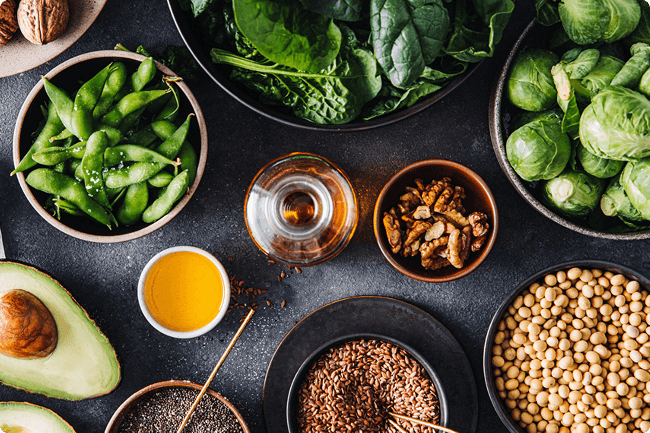
Fiber types that feed beneficial gut bacteria
Different fibers nourish different microbial populations.
Beta-glucans
Found in oats and barley, these fibers have been associated with improvements in cholesterol levels and post-meal glucose regulation.
Resistant starch
Found in beans, lentils, and cooled potatoes, resistant starch resists digestion in the small intestine and becomes fuel for microbes in the colon.
Pectin
Found in apples and citrus fruits, pectin contributes to microbial diversity and fermentation.
Inulin and fructooligosaccharides (FOS)
Found in garlic, onions, asparagus, and chicory root, these fibers are well known for their prebiotic effects.
Because different microbes prefer different fibers, consuming a variety of plant foods tends to support a more balanced microbiome.
The “fiber first” meal strategy
In addition to total fiber intake, meal structure may also influence glucose response.
Meals that start with fiber and protein tend to produce smoother glucose curves. This is likely because fiber and protein slow gastric emptying and blunt the rapid digestion of carbohydrates that follow.
A practical approach can look like this:
- Fiber first (vegetables, beans, lentils)
- Protein second (chicken, salmon, tofu)
- Carbohydrates last (rice, potatoes, bread, pasta)
This sequence doesn’t eliminate glucose rises. It simply moderates the speed and magnitude of the spike.

What glucose biosensor data often shows
- Meals with low fiber and refined carbohydrates often lead to a rapid glucose spike followed by a drop
- Meals with fiber, protein, and fat tend to produce a slower glucose rise, a smoother curve, and longer satiety
What’s interesting is that the total carbohydrate amount may be similar. The context of the meal is what changes the glucose response.
Simple fiber swaps that support glucose stability
Increasing fiber intake does not necessarily require a major change in eating patterns. Small ingredient substitutions can meaningfully increase the fiber content of a meal.
Examples include:
- Replacing white rice with quinoa or lentil-grain blends
- Choosing chickpea or lentil pasta instead of refined pasta
- Swapping chips for roasted chickpeas
- Replacing low-fiber breakfast cereals with oats, chia, or flax
- Pairing crackers with hummus and vegetables
These adjustments increase fiber intake while keeping meals familiar and realistic.
The practical takeaway
Fiber plays a meaningful role in digestion, microbiome function, and metabolic regulation. Increasing fiber intake and structuring meals around fiber-rich foods is one of the more reliable ways to support steadier glucose patterns.
At the same time, fiber works best as part of a broader approach. Building meals that begin with fiber-rich foods and include a variety of plant sources can support both gut health and glucose stability over time.
The production of this article was sponsored by Stelo by Dexcom.
Author profile
KC
Kate Daugherty, MS, CNS
Kate Daugherty, MS, CNS, is a Certified Nutrition Specialist and functional medicine nutritionist with a Master’s in Human Nutrition and Functional Medicine.