PCOS, PMOS, and insulin resistance: How a biosensor can help you see the patterns
Published: Oct. 13, 2026
3 min read

The content in this article should not be taken as medical advice. Please consult with your healthcare provider regarding your individual health needs.
If you've been learning about PMOS (polyendocrine metabolic ovarian syndrome), the condition that used to be called PCOS (polycystic ovarian syndrome), you've probably picked up on how much the new name leans on one word: metabolic. That's the whole point of the rename. For years the old name made this sound like it lived only in the ovaries, when it's really a full-body story about hormones and energy.1
And right at the center of that story is how your body handles glucose. The good news is that's something you can actually watch. Let's walk through why glucose matters in relation to PMOS, and how a wearable biosensor can help you connect the dots.

What PMOS has to do with glucose and insulin resistance
Your body runs on glucose. When you eat, your glucose rises, and the insulin hormone acts like a key, letting that glucose into your cells to be used for energy.
With PMOS, insulin can help explain how glucose, hormones, and symptoms can become connected. Think of insulin as the signal that helps open the door to your cells so glucose can move in and be used for fuel. After you eat, your pancreas sends insulin to help that process happen. When your body responds well, it may only take a little insulin to open the door. But with insulin resistance, that door can feel heavier, so your body has to send out more insulin to get the same job done.1,6
That extra insulin doesn’t stay quiet. In PMOS or PCOS, higher insulin levels can nudge the ovaries to produce more androgens, including testosterone. Those higher androgen levels can play a role in common PMOS symptoms, like irregular ovulation, unwanted facial or body hair, and changes in where the body stores weight. And because higher testosterone may also make insulin resistance worse, the cycle can keep feeding itself.1,6
That’s why glucose is a meaningful piece of the PMOS story.
Why watching your glucose matters
When your body handles glucose smoothly, a lot of systems can benefit. Here's what's worth paying attention to.
Steadier post-meal rises
When insulin is working well, your cells take up glucose efficiently after you eat, and your levels may rise and settle without long, drawn-out glucose spikes. When insulin resistance is in the picture, those rises can be larger or last longer. Seeing the difference is useful information.2,3
Day-to-day energy
That same fuel system shapes how you feel between meals. Smoother glucose patterns tend to track with steadier energy, instead of the spike-and-crash that can leave you feeling foggy or tired.8
Long-term metabolic health
Insulin resistance is linked to longer-term risks, including type 2 diabetes and cardiovascular disease— and women with PMOS carry a higher risk. The encouraging part: this is modifiable. Lifestyle habits can improve insulin sensitivity over time, and they're considered the first-line approach to managing the condition.1,6
 4 ways to use a biosensor on your PMOS journey
While a glucose biosensor doesn’t measure insulin directly, it can help you see how your body responds to meals, movement, sleep, and timing, giving you useful clues about the patterns that may be influencing your metabolic health.
Think of these less as rules and more as small experiments you can try to see what works for you:
1. Find your personal spiker foods
The same diet can affect two people completely differently. A glucose biosensor uncovers how specific foods affect your glucose response, so you learn which choices keep you steady and which send you on a roller coaster. A simple move that may help is to eat protein and healthy fat before eating carbs to dampen the glucose rise, rather than cutting carbs out entirely.
2. Test the "walk after meals" trick
A brisk walk after eating is one of the most reliable ways to blunt a glucose spike. With a biosensor, you can actually see the difference between sitting on the couch after dinner and taking a 10-minute stroll. Movement is strongly tied to better insulin sensitivity in women with PMOS, and seeing the patterns can make it stick. Mixing it up helps too — aerobic movement and strength training can support glucose handling in different ways.5
3. Notice what sleep and stress do
Glucose isn't only about food. Even a single rough night of sleep can lower insulin sensitivity and raise glucose variability the next day.7 Watching those patterns can be a gentle, non-judgmental nudge toward protecting your sleep and managing stress — not as willpower, but as data.
4. Give your body time between meals
A consistent overnight gap between dinner and breakfast gives your body a chance to shift back toward using stored energy. This isn't about strict fasting — just steady rhythm. A biosensor can show you whether your overnight and morning numbers settle more when you keep that gap consistent.
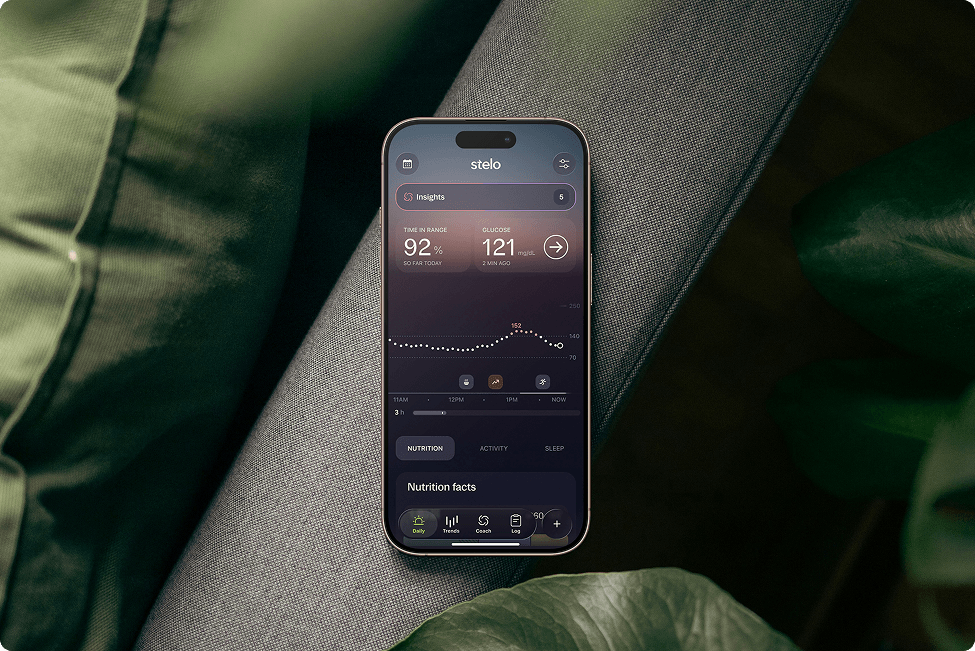
Connecting the dots with Stelo
A wearable glucose biosensor like Stelo lets you see how meals, movement, sleep, and timing shape your glucose throughout the day and night. For a condition that's all about metabolism, that's a genuinely useful window.
Here are two ways to get the most out of your glucose data:
1. Look for patterns across your day.
Notice how your glucose responds to different meals, different kinds of movement, and different nights of sleep. You might see smoother rises when a meal includes protein and fiber, or more variability after a short night. Over time, the patterns, not any single data point, are what tell the story.
2. Turn everyday choices into simple experiments.
For example, try oatmeal on its own versus oatmeal with nuts or yogurt. Try a carb-heavy plate versus the same meal with veggies and protein added. You're running a study with a sample size of one — you — and that's exactly the kind of personal insight this condition rewards.

Pro tip: Curious what else you can learn from your glucose data? Explore additional experiments that can help you uncover new patterns and insights.
Keeping your metabolism in your corner
Managing PMOS isn't something you switch on overnight. It builds gradually through everyday habits: how you move, how you eat, how you sleep, and how consistently you give your body time between meals.
Stelo can show you which of those small choices your body responds to best — and for a condition defined by its metabolism, seeing those patterns clearly is a real place to start.

Curated & reviewed by: Karen Elkind-Hirsch
M.Sc., Ph.D
M.Sc., Ph.D
Karen E. Elkind-Hirsch, M.Sc., Ph.D. is a senior clinical scientist at Dexcom and experienced clinical researcher specializing in diabetes, reproductive endocrinology, metabolic disorders, and women’s health.

Written by: Stelo Team
References
- Polyendocrine metabolic ovarian syndrome, the new name for polycystic ovary syndrome: a multistep global consensus process
- Feasibility of Continuous Glucose Monitor Use and Glucose Pattern Analysis in Females with Polycystic Ovary Syndrome
- Different Glucose Variability in Women With Polycystic Ovary Syndrome With and Without Insulin Resistance: A Pilot Study
- Glucose Evaluation Through Continuous Glucose Monitors in Polycystic Ovary Syndrome
- Physical Activity, Rather Than Diet, Is Linked to Lower Insulin Resistance in PCOS Women — A Case-Control Study
- International Evidence-Based Guideline for the Assessment and Management of PCOS
- Chronic Insufficient Sleep in Women Impairs Insulin Sensitivity Independent of Adiposity Changes: Results of a Randomized Trial
- Continuous glucose monitoring: beyond diabetes management